
Blog
ALATA vs Mehndi: Which is Better for Weddings and Festivals?

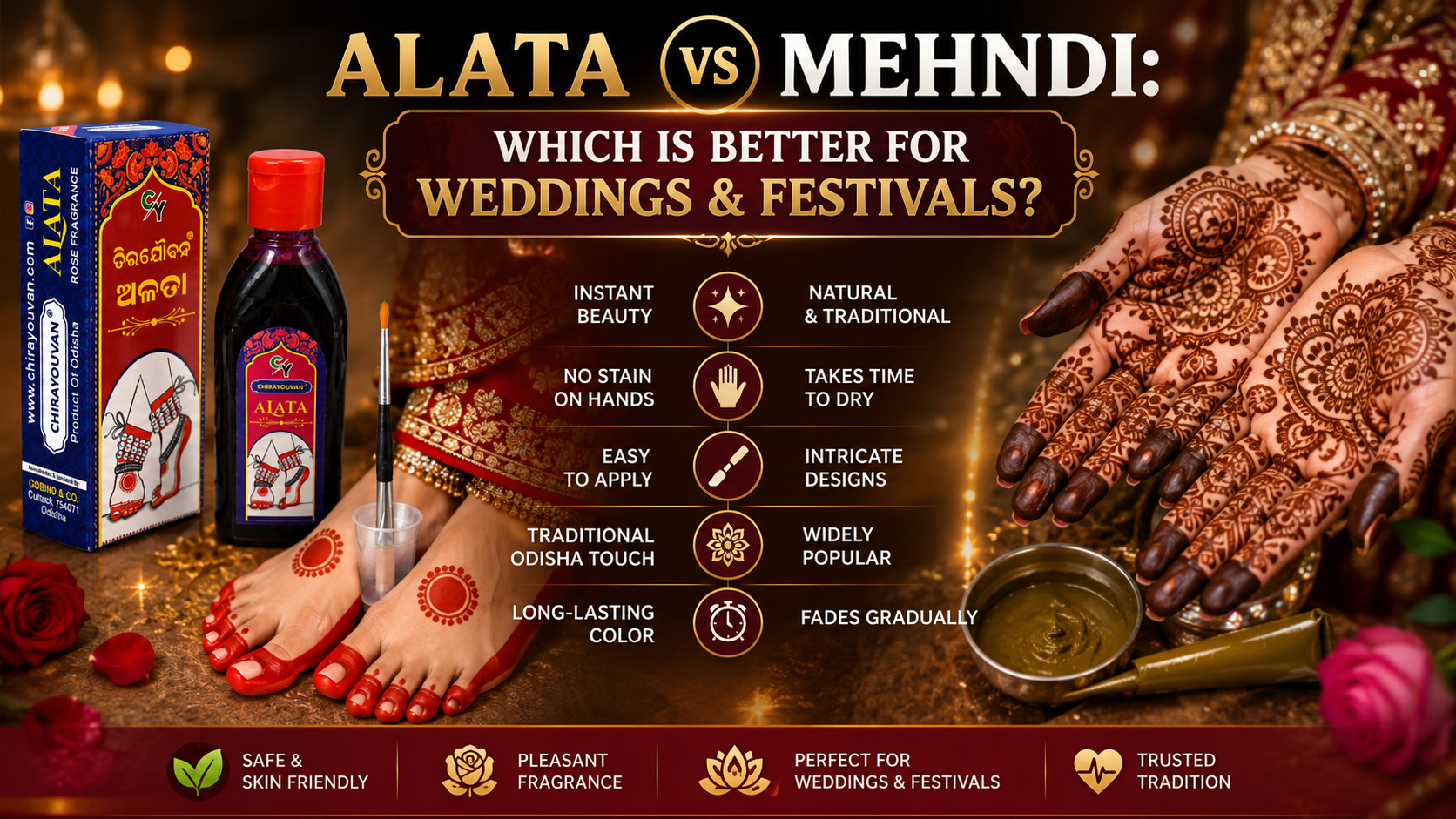
ALATA vs Mehndi, Bridal Beauty Tips
Today
*Keyword:* What is ALATA, Traditional ALATA, Alta for Feet
Alta (or Alata) is a traditional red dye applied to women’s feet and sometimes hands in India, especially during weddings, festivals, and classical dances. It symbolizes auspiciousness, prosperity, femininity, and divine energy, with deep cultural roots in Hindu and Bengali traditions.
🌺 What is Alta / Alata?
- Definition: Alta (also called Alata) is a crimson-red liquid dye traditionally applied to the feet and hands of women.
- Composition: Originally made from lac resin (a secretion from lac insects), mixed with natural colorants and water. Today, it is also commercially manufactured.
- Cultural Role: Used in bridal rituals, religious ceremonies, and classical dance forms like Odissi, Kathak, and Bharatanatyam.
- Symbolism: Represents fertility, prosperity, marital bliss, and divine feminine energy (Shakti).
👣 Why Alta is Applied to Feet
- Feet in Indian Tradition: Feet are considered sacred; touching elders’ feet is a sign of respect, and the bride’s red footprints symbolize prosperity entering the household.
- Ritual Meaning: Applying Alta is believed to invite blessings, good fortune, and positive energy.
- Bengali Weddings: Brides paint their feet with Alta before marriage as a symbol of new beginnings, love, and fertility.
🎨 Traditional Alta Designs for Feet
Alta is not just applied plainly—it is often styled into decorative patterns:
| Style | Description | Occasion | |
|---|---|---|---|
| Traditional Alta Design | A large central circle with smaller dots around, toes colored fully or partially. | Weddings, festivals | |
| Designer Alta | Thin lines and intricate motifs added to traditional circles. | Bridal functions | |
| Traditional-Modern Mix | Combination of bold circles with fine lines for a stylish look. | Young brides, modern ceremonies | |
| Alta-Kumkum Design | Alta base with white kumkum dots or floral motifs. | Special rituals | |
| Elite Alta Design | Alta with detailed floral/leaf patterns drawn over it. | Grand weddings, professional styling |
🌸 Key Takeaways
- Alta = Alata = Traditional red dye for feet/hands.
- Traditional Alta emphasizes auspicious circles and toe coloring.
- Modern Alta blends decorative artistry with tradition.
- Alta for Feet is most common, symbolizing prosperity and divine blessings.
Would you like me to show you visual examples of traditional Alta foot designs (like bridal circles, floral motifs, or modern blends)? That way, you can see how each style looks in practice.
How to Apply ALATA, ALATA Application Tips
To apply Alta (Alata) beautifully on feet or hands, use a small brush or cotton ball to create smooth, even strokes, starting with circles on the center of the sole and filling toes, then add decorative motifs if desired. The key is even application, quick drying, and clean edges for a festive, long-lasting look.
🪔 Step-by-Step Guide to Applying Alta
- Preparation
- Wash and dry feet/hands thoroughly.
- Apply a little moisturizer or coconut oil around the edges to prevent staining outside the design.
- Shake the Alta bottle well before use.
- Basic Application
- Dip a cotton ball or thin brush into Alta.
- Start with a central circle on the sole or palm.
- Color the toes/fingers fully or partially, depending on tradition.
- Add dots or lines around the circle for a classic design.
- Design Options
- Traditional: Bold circle + fully colored toes.
- Modern: Thin lines, floral motifs, or geometric patterns.
- Bridal: Intricate designs combining Alta with Kumkum or Mehndi.
- Drying & Finishing
- Allow 5–10 minutes to dry completely.
- Avoid smudging by keeping feet apart until set.
- For longer-lasting color, apply a second thin coat.
🌸 Application Tips
- Even Coating: Use small amounts at a time to avoid blotches.
- Sharp Edges: Outline with a thin brush for neat borders.
- Quick Fix: If smudged, wipe with a damp cloth immediately.
- Longevity: Apply a thin layer of transparent nail polish over dried Alta to seal the color.
- Skin Safety: If using chemical Alta, test on a small patch first to avoid irritation.
🌿 Natural Homemade Alta (Ayurvedic Method)
If you prefer a skin-friendly, traditional version:
- Ingredients: Beetroot juice, betel leaves, tea leaves, water.
- Method: Boil together for 5 minutes, strain, and use as dye.
- Benefit: Gentle on skin, adds Ayurvedic healing touch.
🎭 When to Apply Alta
- Festivals: Durga Puja, Diwali, Teej, Karva Chauth.
- Weddings: Brides apply Alta for auspicious entry.
- Dance Performances: Odissi, Kathak, Bharatanatyam use Alta for expressive gestures.
✅ Quick Tip: Always keep a small cotton swab handy during application to correct mistakes instantly.
Would you like me to create a visual step-by-step Alta application guide (showing central circle, toe coloring, and decorative motifs) so you can follow it easily?
ALATA vs Mehndi, Bridal Beauty Tips
Great question! Alta (Alata) and Mehndi (Henna) are both traditional beauty adornments in Indian culture, but they differ in symbolism, application, and bridal use. Let’s break it down:
🌺 Alta (Alata)
- Color & Material: Bright crimson-red liquid, traditionally made from lac resin.
- Application: Painted on feet and hands with cotton or brush, often in circles and toe coloring.
- Symbolism: Represents auspiciousness, prosperity, fertility, and divine feminine energy.
- Bridal Role: Brides apply Alta on feet for ritual entry into the household; red footprints symbolize prosperity.
- Duration: Short-lived, fades within 1–2 days.
🌿 Mehndi (Henna)
- Color & Material: Natural dye from henna leaves, producing reddish-brown designs.
- Application: Intricate patterns on hands, arms, and feet, applied with cones.
- Symbolism: Associated with love, joy, marital bliss, and protection against evil.
- Bridal Role: Bridal Mehndi is elaborate, covering hands and feet, often with hidden initials of the groom.
- Duration: Lasts 1–3 weeks, darkens over time.
💍 Bridal Beauty Tips
- Combine Both: Many brides use Mehndi for hands and Alta for feet, balancing intricate artistry with traditional symbolism.
- Timing: Apply Mehndi 2–3 days before the wedding (to allow color to darken), and Alta on the wedding day for fresh vibrancy.
- Skin Prep: Exfoliate and moisturize before application for smooth designs.
- Enhancements: Add glitter, stones, or kumkum dots to Mehndi; pair Alta with anklets for a striking look.
- Photography Tip: Mehndi shows best in close-up shots, while Alta enhances full-length bridal portraits with red footprints.
✨ Key Takeaway:
- Alta = Instant auspicious red glow (feet-focused).
- Mehndi = Long-lasting intricate artistry (hands & feet). Together, they create a complete bridal beauty statement blending tradition and elegance